
INTRODUCTION
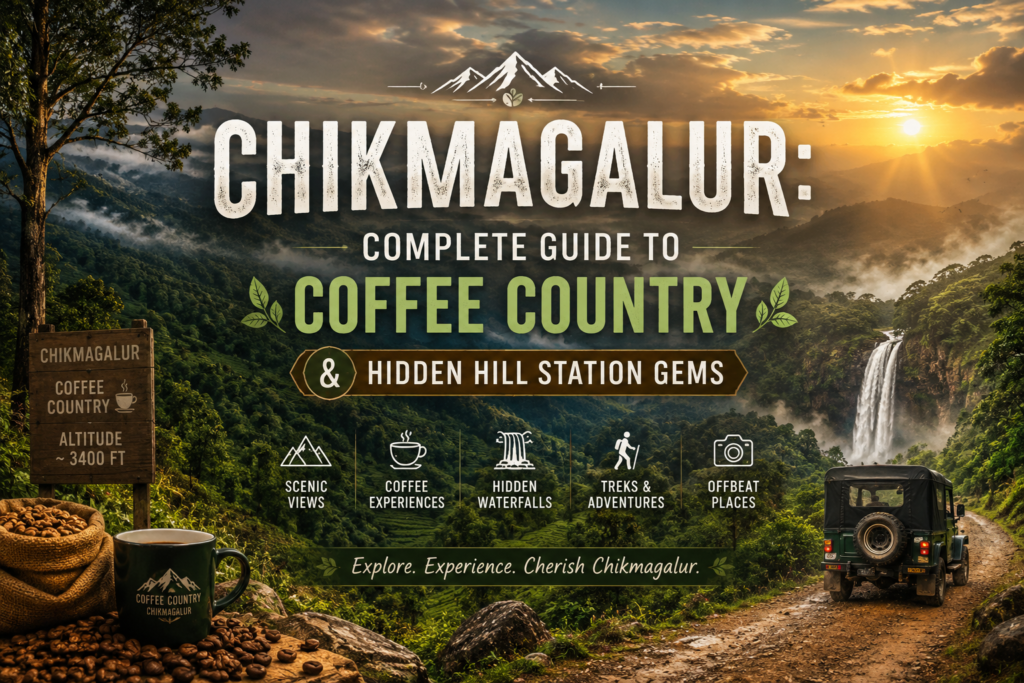
Nestled in the Western Ghats of Karnataka, Chikmagalur is India’s premier coffee destination and an increasingly popular hill station retreat. With its lush coffee plantations, misty landscapes, and adventure-filled trekking routes, Chikmagalur has transformed from a quiet agricultural hub into one of South India’s most sought-after vacation spots.
Whether you’re a coffee enthusiast exploring estate tours, an adventure seeker conquering mountain peaks, or a couple seeking a romantic getaway among rolling hills, Chikmagalur delivers on all fronts. This complete guide covers everything you need to plan the perfect Chikmagalur vacation—from where to stay to the best trekking trails, coffee estates to visit, and local experiences that make this region truly unique.
Why Chikmagalur? It’s where authentic hospitality meets adventure, where you can sip freshly brewed coffee overlooking endless plantations, and where every season brings something new to explore.
ABOUT CHIKMAGALUR – THE COFFEE HEARTLAND OF INDIA
Chikmagalur, derived from the Kannada words “Chikka” (small) and “Magaluru” (town), sits at an elevation of 1,100 meters, making it one of the most accessible hill stations in South India. The region spans across 2,247 square kilometers and is home to India’s first coffee plantation, established in the 17th century.
Why It’s Known as India’s Coffee Capital
Coffee cultivation in Chikmagalur isn’t just an agricultural practice—it’s a way of life. The region produces over 30% of India’s total coffee output, with arabica and robusta varieties thriving in the volcanic red soil and misty climate. Coffee estates here range from massive commercial operations to boutique organic farms offering immersive experiences.
Best Time to Visit
Peak Season (September to February): Cool weather, clear skies, and lush green landscapes. Ideal for trekking and sightseeing. Monsoons create dramatic misty vistas perfect for photography.
Summer (March to May): Warm but pleasant, fewer crowds, excellent for budget travelers. Coffee plantation tours are less crowded.
Avoid: Late May through August gets oversaturated with tourists and the roads become slippery.
BEST RESORTS & STAYS IN CHIKMAGALUR
When selecting accommodation in Chikmagalur, you have options ranging from luxury resort experiences to budget homestays. The key is choosing based on your location preference—coffee estate proximity, town center convenience, or proximity to trekking trails.
Best Resorts in Chikmagalur
Happy Destination Stays offers curated resort options in Chikmagalur that balance luxury with authentic hill station experiences. Whether you’re looking for a coffee plantation stay or a valley-view resort, our properties are strategically located to give you access to the best attractions.
Types of Accommodations
Luxury Resorts: Coffee estate resorts offering spa facilities, multi-cuisine dining, and plantation tours included. Perfect for honeymoons and premium getaways.
Boutique Stays: Smaller, personalized properties often run by local families. Great for experiencing authentic Chikmagalur hospitality.
Budget Homestays & Lodges: Affordable options in town areas, ideal for backpackers and budget-conscious travelers.
Coffee Estate Bungalows: Stay directly on working plantations, wake up to coffee picking activities, and learn harvesting processes firsthand.
What to Look for in a Resort
- Proximity to major trekking trails (Mullayanagiri, Baba Budangiri)
- Coffee estate or nature views
- In-house dining with local cuisine
- Activity packages (plantation tours, trekking, cooking classes)
- WiFi and basic amenities if needed
TOP TREKKING TRAILS IN CHIKMAGALUR
Chikmagalur is a trekker’s paradise with routes ranging from beginner-friendly walks to challenging peaks. The region’s coffee plantations, grasslands, and forest trails create diverse trekking experiences.
1. Mullayanagiri Trek (3,652 meters)
Difficulty Level: Moderate | Duration: 6-7 hours | Best Season: September to March
The highest peak in Karnataka, Mullayanagiri offers panoramic views of the entire Chikmagalur region. The trek passes through coffee plantations in the lower sections and open grasslands at the summit. Early morning treks reward you with sunrise views that stretch across multiple districts.
What to Expect: Well-defined trail, moderate elevation gain, approximately 8 km round trip from base to summit. Pack warm clothes for the cool summit weather.
2. Baba Budangiri Trek (1,895 meters)
Difficulty Level: Moderate | Duration: 4-5 hours | Best Season: July to February
Named after a 14th-century Sufi saint, this trek is popular for its unique combination of historical significance and natural beauty. The route passes through dense forests, tea estates, and coffee plantations. The summit offers views of coffee valleys and distant Western Ghats.
Highlight: The trek culminates at a shrine dedicated to Baba Budan, creating a spiritual atmosphere alongside adventure.
3. Kudremukh Trek (1,894 meters)
Difficulty Level: Moderate to Challenging | Duration: 5-6 hours | Best Season: October to May
Meaning “horse’s face” in Kannada (due to its distinctive shape), Kudremukh is a stunning trek combining forest trails, grassland walks, and mountain vistas. The trek often attracts serious trekkers seeking solitude and adventure.
Route: Approximately 7 km from base to summit with significant elevation gain. Best attempted with a guide.
4. Hebbe Falls Trek
Difficulty Level: Easy to Moderate | Duration: 3-4 hours | Best Season: September to February
Combine trekking with waterfall exploration on this scenic route through coffee plantations and forest sections. Hebbe Falls, a two-tiered waterfall, is your reward at the trail’s end. Ideal for families and beginner trekkers.
5. Jhari Waterfalls Trek
Difficulty Level: Easy | Duration: 1-2 hours | Best Season: Year-round
A perfect half-day activity, this short trek through plantations leads to the scenic Jhari Waterfalls. Popular with families and groups. The misty forest environment makes it especially beautiful during monsoon months.
COFFEE PLANTATION TOURS & EXPERIENCES
A Chikmagalur vacation isn’t complete without immersing yourself in coffee culture. The region’s plantation tours offer educational and sensory experiences unique to this region.
What You’ll Experience on Coffee Estate Tours
Plantation Walk: Guide-led walks through coffee plants at various growth stages. Learn about arabica vs. robusta varieties, soil composition, and climate requirements.
Harvesting & Processing: Depending on season, observe or participate in coffee picking. See the mechanical and natural processing methods that transform cherry to bean.
Cupping Sessions: Professional coffee tasting where you’ll learn to identify flavor notes, acidity levels, and body characteristics. Similar to wine tasting but for coffee enthusiasts.
Estate Lunch: Many plantations offer farm-to-table meals featuring locally sourced ingredients, often paired with estate coffee.
On-site Roastery Visits: Watch coffee beans being roasted and packaged. Some estates have small cafes where you can enjoy freshly brewed coffee directly overlooking the plantations.
Popular Coffee Estates to Visit
Most resorts can arrange plantation tours, but popular independent estates include Tata Coffee, Chikmagalur Coffee Coop, and smaller organic estates in surrounding areas. Pre-booking is recommended during peak season.
MUST-SEE ATTRACTIONS IN CHIKMAGALUR
Beyond trekking and coffee, Chikmagalur has several natural and cultural attractions worth exploring.
Jhari Waterfalls
A misty waterfall nestled within coffee plantations, Jhari Falls is best visited during monsoon months (June-September) when water volume peaks. The trek is easy and family-friendly.
Hebbe Falls
A two-tiered waterfall accessible by trekking through forested sections. The lower falls can be reached on foot, while the upper falls require rock climbing skills. Popular during monsoon season.
Kemmanagundi Lake
A scenic artificial lake surrounded by pine forests and sprawling hills. Ideal for boating, picnicking, and photography. The lake is less crowded than Chikmagalur’s other attractions, making it perfect for a peaceful afternoon.
Abukunadu Lake
Tucked away from main tourist routes, this serene lake offers fishing opportunities and tranquil forest surroundings. Birdwatchers frequently spot diverse species here.
Kallathi Hot Springs
A natural thermal water spring believed to have medicinal properties. Located a short drive from Chikmagalur town, it’s a unique health-oriented attraction.
Manikyadhara Falls
A picturesque waterfall surrounded by dense forest, accessible via a moderate trek. Local legends associate it with Hindu mythology, adding cultural depth to the visit.
ADVENTURE ACTIVITIES IN CHIKMAGALUR
Beyond trekking, Chikmagalur offers diverse adventure activities suitable for different skill levels and interests.
Rock Climbing & Rappelling
Multiple rock formations in the region offer climbing opportunities. Professional operators provide equipment and training for beginners through advanced climbers.
Mountain Biking
The region’s terrain is ideal for off-road cycling. Coffee estate roads and forest trails provide varied difficulty levels. Rentals available in town; guided tours recommended for first-timers.
Paragliding
Seasonal paragliding occurs from higher elevations, offering aerial views of coffee plantations and valleys. Operators typically require fair-weather conditions and minimum wind speeds.
Fishing
Chikmagalur’s lakes and streams are stocked with fish species like mahseer and catfish. Permits required; local guides can assist with planning fishing excursions.
Bird Watching
The region’s forests and plantations attract over 100 bird species. Early morning bird watching tours are most productive, particularly during migration seasons (September-October, February-March).
LOCAL CUISINE & DINING EXPERIENCES
Chikmagalur’s food scene reflects Karnataka’s culinary traditions with coffee country adaptations.
Must-Try Local Dishes
Bisi Bele Bhath: A rice dish with lentils, vegetables, and traditional spices—comfort food that fuels local workers.
Akki Roti: A millet flatbread served with locally made butter and curry, offering authentic hill station flavors.
Pork Curry (for non-vegetarians): The Kodava community’s signature dish, slow-cooked with spices and coconut—best experienced in family-run restaurants.
Coffee Cuisine: Innovative chefs now incorporate coffee into savory dishes—coffee-rubbed meats, coffee-infused sauces, and coffee-marinated preparations.
Coffee Experiences
Beyond tasting, many cafes and resorts offer coffee-themed dining experiences:
- Coffee and local cheese pairings
- Coffee-infused desserts
- Estate-to-cup fresh brewing demonstrations
- Barista workshops for enthusiasts
Where to Eat
Town center restaurants offer budget-friendly options; resort dining provides curated experiences with views. For authentic experiences, seek out family-run eateries near town center or on coffee estates.
CHIKMAGALUR FOR DIFFERENT TRAVELER TYPES
For Adventure Seekers
Itinerary Focus: Multi-day trekking (Mullayanagiri, Kudremukh), rock climbing, mountain biking, paragliding Duration: 4-5 days minimum Best Season: October-February Resort Choice: Properties with adventure packages and guide arrangements
For Coffee Enthusiasts
Itinerary Focus: Daily plantation tours, cupping sessions, estate lunches, coffee tastings, farmer interactions Duration: 3-4 days Best Season: Year-round Resort Choice: Coffee estate properties or estates with curated coffee tour partnerships
For Couples & Honeymooners
Itinerary Focus: Scenic drives, sunset watching from viewpoints, couple spa treatments, romantic dinners, quiet nature walks Duration: 3-4 days Best Season: September-February Resort Choice: Luxury properties with romantic amenities, private plantation views, spa facilities
For Families
Itinerary Focus: Short nature walks, waterfall visits, lake activities, gentle trekking, wildlife spotting, cultural experiences Duration: 3-5 days Best Season: October-February Resort Choice: Family-oriented resorts with activity coordination, spacious rooms, kid-friendly dining
For Backpackers & Budget Travelers
Itinerary Focus: Trekking, budget eateries, free viewpoint visits, town exploration, social interactions at homestays Duration: 4-7 days Best Season: November-January (off-peak is December) Resort Choice: Budget homestays, shared accommodations, plantation worker lodges (with permission)
PRACTICAL TRAVEL TIPS FOR CHIKMAGALUR
Getting There
By Air: Nearest airport is Kempegowda International Airport, Bangalore (240 km away, ~5-6 hours drive)
By Rail: Closest railway station is Kadur (~60 km away), though Bangalore Central is the major hub
By Road: Best option for independent travelers. Bangalore to Chikmagalur is approximately 240 km via scenic routes. Shared cabs and buses available from Bangalore.
What to Pack
- Warm layers (mornings/evenings are cool even in summer)
- Waterproof jacket (especially during monsoon)
- Sturdy trekking shoes with good grip
- Sun protection (sunscreen, hat)
- Binoculars for bird watching
- Camera for photography
- Reusable water bottle
Safety Considerations
- Hire experienced guides for trekking, especially for challenging routes
- Inform someone about your trekking plans and expected return time
- Carry first-aid supplies; nearest medical facilities in town are adequate
- Monsoons can make trails slippery; avoid trekking immediately after heavy rain
- Don’t venture into unknown plantation areas without permission
Budget Planning
Budget Stay: ₹800-1,500 per night (homestays, basic lodges) Mid-Range Resort: ₹2,500-5,000 per night (Happy Destination Stays properties) Luxury Resort: ₹5,000-15,000+ per night Daily Meals: ₹300-500 per person (budget eateries); ₹800-1,500+ in resorts Activities: Trekking guides ₹500-1,000/day; coffee tour ₹1,000-2,000; adventure activities ₹1,500-5,000+
Mobile & Internet
Mobile connectivity is available throughout town and popular tourist areas, though some trekking routes and remote plantations have weak signals. Plan accordingly if relying on navigation apps.
CHIKMAGALUR BY SEASON – WHAT TO EXPECT
Monsoon (June-August)
Weather: Heavy rainfall, cool temperatures (15-20°C) Pros: Lush green landscapes, fewer crowds, dramatic misty scenery, high waterfall volumes Cons: Slippery trails, some roads may have limited access, higher humidity Best For: Photography enthusiasts, nature lovers, budget travelers
Post-Monsoon (September-October)
Weather: Clear skies, moderate rainfall, cool temperatures (18-25°C) Pros: Ideal for trekking, excellent visibility, pleasant weather Cons: Peak tourist season, higher prices, crowded attractions Best For: All traveler types
Winter (November-February)
Weather: Cool and pleasant (10-22°C), minimal rainfall, clear sunny days Pros: Perfect trekking weather, picturesque landscapes, comfortable outdoor activities Cons: Peak season pricing, crowded resorts, must book in advance Best For: Families, couples, adventure seekers
Summer (March-May)
Weather: Warm (22-30°C), occasional pre-monsoon showers Pros: Lower prices, fewer crowds, pleasant evenings and mornings Cons: Warm midday temperatures, some coffee estates less active, some water sources dry Best For: Budget travelers, those seeking solitude
COFFEE CULTURE DEEP-DIVE
History of Coffee in Chikmagalur
Coffee arrived in India through Baba Budan, a 17th-century Sufi saint who smuggled coffee beans from Yemen and cultivated them on Baba Budangiri hills. This act transformed Chikmagalur into India’s coffee heartland, making it historically significant for global coffee trade.
Arabica vs. Robusta in Chikmagalur
Arabica: Premium variety grown at higher elevations (1,000-1,600m). Smoother flavor, higher acidity, more complex taste profiles. Comprises 45-50% of Chikmagalur production. Prices higher due to quality perception.
Robusta: Hardy variety, easier to cultivate, lower elevation friendly. Stronger, more bitter flavors, higher caffeine content. Comprises 50-55% of Chikmagalur production. Primarily used for instant coffee and espresso blends.
Coffee Processing Methods
Wet Process (Washed): Berries pulped, fermented, washed. Results in brighter, more acidic cups. Labor-intensive but premium-quality outcome.
Dry Process (Natural): Whole berries sun-dried before processing. Results in fruitier, fuller-bodied cups. Less labor-intensive, common in certain estates.
Semi-Washed (Honey): Hybrid method retaining some fruit during drying. Balanced flavor between wet and dry methods.
Tasting Coffee Like a Professional
Appearance: Examine bean color, size uniformity, and lack of defects Aroma (Dry): Smell the whole bean before brewing Aroma (Wet): Smell the ground coffee in hot water Taste: Take small slurps, allowing air to mix for full flavor development Body: Notice texture and weight on your palate Acidity: Identify brightness and liveliness without harshness Finish: Observe aftertaste duration and character
RESPONSIBLE TOURISM IN CHIKMAGALUR
As Chikmagalur’s popularity grows, responsible tourism practices ensure sustainability of this region’s natural and agricultural heritage.
Sustainable Practices
Respect Plantation Areas: Many plantations are working agricultural land. Visit only authorized areas and with permission.
Waste Management: Carry out what you carry in. Use designated waste bins in populated areas.
Water Conservation: Plantations depend on seasonal water. Minimize water usage at accommodations.
Support Local Economy: Eat at local restaurants, hire local guides, purchase coffee directly from estates.
Wildlife Protection: Observe animals from distance without disturbing. Never feed wildlife.
Trail Etiquette: Stay on marked trails to prevent erosion and vegetation damage.
Community Engagement
Interacting positively with local communities enriches your experience:
- Learn about coffee farming from workers
- Participate in community activities offered by resorts
- Respect local customs and dress modestly in cultural sites
- Buy directly from local artisans rather than tourist middlemen
FREQUENTLY ASKED QUESTIONS ABOUT CHIKMAGALUR
Q: What’s the best time for a first-time visit to Chikmagalur? A: October-February offers ideal weather for all activities. September and March are good but slightly more crowded.
Q: How many days should I spend in Chikmagalur? A: 3-4 days is minimum to experience coffee estates and trekking. 5-7 days allows deeper exploration and relaxation.
Q: Can beginners trek in Chikmagalur? A: Yes. Trails like Hebbe Falls and Jhari are beginner-friendly. More challenging peaks require fitness but experienced guides can support.
Q: Is it safe for solo female travelers? A: Generally safe, especially in town and popular tourist areas. Hiring local guides for trekking is recommended for all solo travelers.
Q: What’s the average cost for a 4-day Chikmagalur trip? A: Budget ₹8,000-15,000; mid-range ₹15,000-35,000; luxury ₹40,000+. Includes accommodation, meals, activities, transport.
Q: Can I visit during monsoon? A: Yes, but trekking becomes risky. Ideal for photography and experiencing nature’s dramatic side.
Q: Are coffee plantation tours educational enough for beginners? A: Absolutely. Tours are designed for all knowledge levels with professional guides explaining every step.
Q: What altitude do trekking peaks reach? A: Mullayanagiri is 3,652m (highest in Karnataka). Most popular treks range 1,500-2,000m, posing minimal altitude challenges.
PLANNING YOUR CHIKMAGALUR ITINERARY
3-Day Chikmagalur Itinerary (Adventure Focus)
Day 1: Arrive Chikmagalur, settle into resort, explore town, evening plantation walk Day 2: Full-day trek (Mullayanagiri or Baba Budangiri), return for sunset Day 3: Leisure morning, waterfall visit (Jhari or Hebbe), travel back
4-Day Chikmagalur Itinerary (Balanced Experience)
Day 1: Arrive, resort check-in, evening town exploration Day 2: Coffee plantation tour with cupping session Day 3: Full-day trekking (Mullayanagiri recommended for good views) Day 4: Morning waterfall visit (Hebbe Falls), afternoon departure
5-Day Chikmagalur Itinerary (Premium Experience)
Day 1: Arrive Chikmagalur, settle at luxury resort, evening village walk Day 2: Coffee estate immersion—morning tour, cupping session, estate lunch Day 3: Adventure day—trekking, rock climbing, or paragliding Day 4: Waterfall exploration (Hebbe or Jhari) combined with birdwatching Day 5: Leisure morning, spa treatment, evening departure
7-Day Chikmagalur Deep-Dive (Complete Exploration)
Day 1: Arrival, resort settling, evening orientation Day 2: Coffee plantation deep-dive with farmer interactions Day 3: Mullayanagiri trek with sunrise experience Day 4: Kudremukh trek or rock climbing adventure Day 5: Waterfall tour (Hebbe/Jhari/Manikyadhara) and birdwatching Day 6: Lake activities (Kemmanagundi/Abukunadu) or adventure sports (paragliding/mountain biking) Day 7: Leisure morning, local market exploration, departure
GETTING THE MOST FROM YOUR RESORT STAY
Selecting the right resort in Chikmagalur transforms your vacation experience. Look for properties offering:
Integrated Activity Packages: Trekking guide arrangements, coffee tour bookings, waterfall transportation Culinary Experiences: Farm-to-table meals, coffee-infused dining, local cuisine expertise Personalized Planning: Staff assistance in customizing itineraries based on interests and fitness levels Wellness Facilities: Spa services, yoga sessions, health-focused dining options Photography Support: Photography tours during golden hours, drone permissions for scenic shots
Happy Destination Stays properties in Chikmagalur are specifically curated to offer these experiences with authentic hospitality and strategic location advantages.
PHOTOGRAPHY IN CHIKMAGALUR
For photography enthusiasts, Chikmagalur offers stunning visual opportunities across multiple subjects.
Best Photography Spots
Sunrise from Mullayanagiri: Golden hour above clouds with multiple valley views Coffee Plantations: Green patchwork landscapes, misty mornings, worker interactions Waterfalls: Dynamic water flow, surrounding forest greenery, especially post-monsoon Lakes: Mirror reflections during calm early mornings Hill Vistas: Layered mountain ranges visible from various viewpoints during clear weather
Photography Tips
- Arrive 30-45 minutes before sunrise for best light
- Use polarizing filters to enhance sky and reduce glare on water
- Monsoon months provide dramatic moody skies; low visibility but premium moodiness
- Respect privacy of local workers and community members before photographing
- Wide-angle lenses ideal for landscape shots; telephoto lenses for wildlife
CONCLUSION
Chikmagalur isn’t just a destination—it’s an immersive experience where coffee culture, adventure, and natural beauty converge. Whether you’re sipping fresh-brewed arabica overlooking endless plantations, conquering Mullayanagiri’s peak at sunrise, or finding tranquility beside misty waterfalls, Chikmagalur delivers moments that become lasting memories.
The best part? You don’t need to be a seasoned traveler or adventure athlete to experience this region. From families to solo backpackers, coffee enthusiasts to adrenaline seekers, Chikmagalur accommodates every travel style and budget.
Ready to plan your Chikmagalur adventure? Explore Happy Destination Stays’ curated resort options to find the perfect base for your hill station escape. Our properties are strategically located to maximize access to trekking trails, coffee estates, and local experiences—with expert staff ready to help you discover Chikmagalur beyond the guidebooks.
Your perfect Chikmagalur story starts with choosing the right resort. Let Happy Destination Stays be your hospitality partner.